


Is your food manufacturing training program built to hold up in practice?

Many food manufacturing organizations invest significant time and effort into training, yet still struggle with inconsistent execution, repeat deviations, or audit findings tied to human error.
The issue is rarely a lack of training activity. More often, it’s a lack of training program design.
This diagnostic checklist is designed to help food manufacturing leaders assess whether their training program is structurally sound—not just complete on paper. Gaps in any one area may not be immediately visible, but they tend to surface under pressure: during audits, high turnover periods, or peak production.
Review the following eight items to identify where your program is resilient and where hidden risk may exist:
1. New Employee Orientation: Where first impressions set the floor
Strong training programs establish expectations early. Weak programs leave new employees to learn informally under pressure.
A structurally sound onboarding program should include:
☐ Standardized onboarding for all plant and facility employees
☐ Introduction to food safety culture, GMPs, allergen awareness, and personal hygiene requirements
☐ Review of site rules, including PPE, traffic patterns, restricted areas, and sanitation expectations
☐ Role-specific responsibilities and food safety risks covered within the first week
When this breaks down:
New hires rely on observation rather than instruction, leading to inconsistent behavior that is difficult to correct later and often surfaces during audits or incidents.
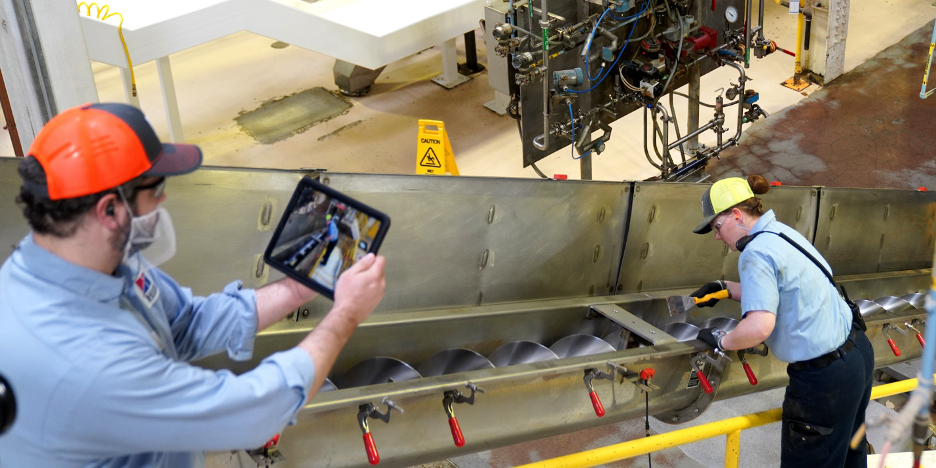
2. Job-specific training: Where competency must be proven, not assumed
Training completion does not equal readiness. High-risk roles require verified competency before independent work.
Effective job-specific training should include:
☐ Documented training paths for each position, including production, sanitation, maintenance, quality, and warehouse roles
☐ Hands-on training completed under supervision before employees work independently on equipment or processes
☐ Verification of competency for critical tasks such as CCPs, allergen changeovers, and sanitation procedures
☐ Individual training progress tracked and signed off by qualified trainers
When this breaks down:
Employees are technically “trained” but unable to execute consistently, leading to repeat deviations and corrective actions that fail to address root causes.
3. Site-specific content: Where generic training fails
Training that does not reflect the actual facility environment rarely survives real operating conditions.
Programs built for real-world execution should include:
☐ Photos and videos of actual lines, equipment, tools, and facility layouts
☐ SOPs tailored to your ingredients, processes, and product categories
☐ Procedures aligned with your food safety plan, such as HACCP or HARPC programs
☐ Content reviewed and approved by quality, food safety, and operations leaders
When this breaks down:
Employees follow procedures that don’t match reality, forcing supervisors to improvise and increasing variation across shifts.
4. Multi-language accessibility: Understanding can’t be optional
Comprehension is a prerequisite for compliance. Training that isn’t accessible creates silent risk.
Accessible programs should ensure:
☐ Training is made available in the primary languages spoken by plant employees
☐ Accurate translation of food safety, quality, and regulatory content
☐ Bilingual signage, job aids, and reference materials are available on the floor
When this breaks down:
Training completion may appear high, but understanding is uneven, increasing the likelihood of human error during critical tasks.
5. Post-training reinforcement: Training completion isn’t retention
Initial training fades without reinforcement. Consistency depends on what happens after completion.
Durable programs should include:
☐ Supervisor or lead check-ins within the first week after training completion
☐ Documented on-the-job observations for GMPs, sanitation, and critical process steps
☐ Coaching and corrective actions that are recorded when gaps are identified
☐ Short refresher lessons or toolbox talks to reinforce high-risk activities
When this breaks down:
Knowledge decay and process drift become normalized, often detected only after an audit finding or incident.
6. Regular content updates: Keeping pace with change
Operations evolve. Training must evolve with them.
An up-to-date training program should include:
☐ Updates after changes to recipes, ingredients, equipment, or processes
☐ Reviews following food safety incidents, customer complaints, or audit findings
☐ Annual reviews of all food safety and compliance training
☐ A clear process for QA, safety, or operations to request training updates
When this breaks down:
Training quickly becomes outdated, creating gaps between documented procedures and actual practice.
7. Refresher training: Managing risk over time
High-risk environments require intentional reinforcement, not one-time instruction.
Effective refresher strategies should include:
☐ Scheduled refresher training for food safety, GMPs, allergens, sanitation, and CCP monitoring
☐ Targeted retraining triggered by deviations, trends, or non-conformances
☐ Seasonal refreshers for temporary labor, new product launches, or peak production periods
When this breaks down:
Training intensity fluctuates with workload, increasing exposure during the periods when risk is highest.
8. Audit-ready records: Documentation must reflect reality
Audit readiness depends on records that demonstrate both training and competency.
Strong documentation systems should include:
☐ A digital system for tracking training completions and competency verification
☐ The ability to generate reports by employee, role, skill, course, date completed, and trainer
☐ Training records that support SQF, BRCGS, FSSC 22000, FDA, and customer audit requirements
When this breaks down:
Organizations scramble during audits, relying on incomplete records that undermine confidence and credibility.

How to use this diagnostic checklist
If gaps appear across multiple sections, the issue is rarely a lack of effort or intent. It is usually a signal that the training system itself is not designed to support consistency, reinforcement, and supervisor involvement at scale.
At that point, organizations typically need to evaluate whether:
- Group-based training is structured or improvised
- Digital learning supports reinforcement, not just completion
- Supervisors are enabled with clear structure and visibility
- Documentation reflects execution, not just attendance
The Alchemy Training System was designed around this reality—combining structured group-based training, digital eLearning, supervisor support, and documentation into a single training system built specifically for food manufacturing environments.
See the Alchemy Training System in action
Discover how to use structured group-based training, digital reinforcement, and real time reporting to reduce human error and strengthen audit readiness.
Schedule a demo