


Why the best manufacturing training programs use a blended model

Food manufacturing leaders are under increasing pressure to deliver training that holds up in real operations, not just on paper. Audit findings, repeat deviations, inconsistent GMP execution, and supervisor overload are rarely caused by a lack of training activity. More often, they are symptoms of training models that were never designed for the realities on the plant floor.
This guide is intended to help food manufacturers evaluate the practical strengths, limitations, and risks of the two most common training approaches—eLearning and instructor-led/group-based training—and understand why many organizations ultimately require a system that intentionally combines them.
eLearning

What it is
eLearning is digitally delivered training that’s completed individually through an online platform, typically managed through a Learning Management System (LMS). Content is accessed on personal or shared devices and tracked for completion and assessment.
Where eLearning works
eLearning is often the first training method organizations adopt because it addresses several operational needs:
- Delivers a consistent core message to every learner
- Allows learners to control pace and progression
- Supports multilingual delivery at scale
- Works well for individual retraining or low-volume needs
- Essential for foundational knowledge, regulatory instruction, and documentation
Where eLearning breaks down in food manufacturing
In high-risk, variable environments, eLearning alone introduces meaningful gaps, including:
- Limited connection between written procedures and real operating conditions
- Minimal opportunity to surface questions, edge cases, or site-specific risk
- No direct visibility into whether learning translates into correct behavior
- Increased reliance on supervisors to fill gaps through informal coaching
- Records that show completion—not understanding or execution
The risk
With eLearning-only programs, training appears compliant on paper, but inconsistencies emerge across shifts. Deviations repeat, and audit confidence erodes because documentation no longer reflects reality on the floor.
Instructor-led training (ILT) or group-based training (GBT)
What it is
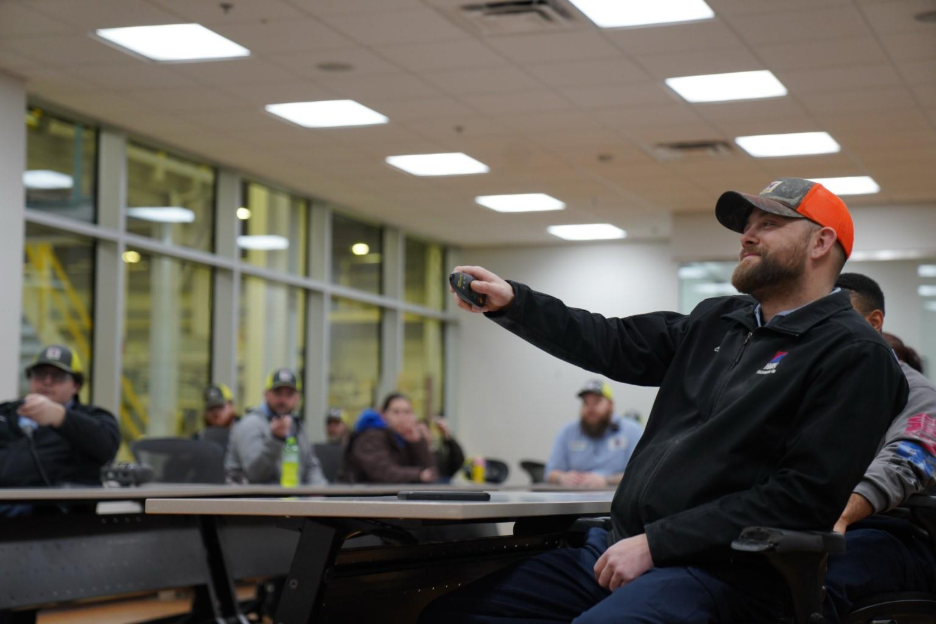
Instructor-led training (ILT) is live training delivered by an instructor to multiple employees in a shared setting. The instructor prepares and presents the material.
Group-based training (GBT) is Intertek Alchemy’s facilitated group-learning approach. An instructor leads the session while the training content is system-guided and delivered through the platform. Each learner actively participates using an Alchemy remote device to respond to knowledge checks, reinforce learning, and engage in discussion—without requiring the instructor to build or present the content.
Where group-based training works
Group-based training is most effective when teams need shared understanding and alignment:
- Efficiently trains multiple workers within a defined timeframe
- Enables discussion that connects training to real work activities
- Improves engagement, attention, and retention
- Reinforces expectations across teams and shifts
- Allows organizations to address nuance, judgment, and situational awareness
In food manufacturing, group-based training is often the only way to translate procedures into real-world application.
Where group-based training breaks down
When relied on alone, group-based training introduces different risks:
- Securing space for large groups can be difficult
- Coordinating schedules across shifts disrupts operations
- Delivery quality varies by instructor, increasing inconsistency
- Learning is harder to repeat, scale, or defend without system support
The risk
Group training provides context—but without structure and reinforcement, that context is difficult to sustain across time, sites, and employee turnover.
Why single-modality training fails at scale
Food manufacturing environments are defined by variability:
- Multiple shifts with competing pressures
- High turnover and seasonal labor
- Multilingual workforces
- Evolving regulatory expectations
- Constant operational change
Training models that rely on only one delivery method struggle under these conditions:
- Consistency without context leads to checkbox compliance and real-world gaps
- Context without consistency leads to drift, variability, and audit risk
Blended training: designing for operational reality
What a blended model enables
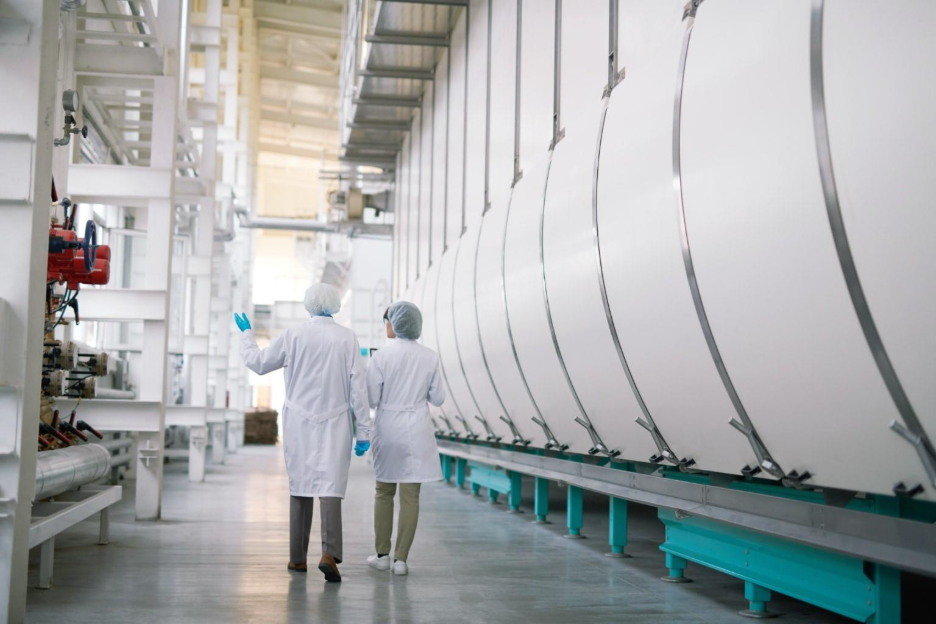
A blended training model intentionally combines eLearning and group-based training, using each where it is most effective:
- Group-based training delivers site-specific learning and shared understanding when interaction matters most
- eLearning provides flexibility for scheduling constraints, language needs, refresher training, and independent topics
- Reinforcement connects learning to observed behavior over time
This is not about adding more training. It is about designing training as a system that scales.
How blended training changes outcomes
In food manufacturing, training must do more than deliver information. It must create shared understanding, consistent execution, and confidence on the floor.
Blended training supports:
- More consistent GMP execution across shifts
- Faster onboarding without sacrificing understanding
- Reduced reliance on supervisor improvisation
- Documentation that aligns with actual execution
- Greater audit confidence because training, behavior, and records are connected
When blended training becomes necessary
Blended training is no longer optional when organizations experience:
- Repeat deviations tied to human error
- Inconsistent execution across shifts or facilities
- Audit findings related to training effectiveness or documentation
- Supervisor overload filling system gaps
- Turnover that strains traditional training approaches
- Recalls or failed regulatory or customer audits
Training as a system, not a set of tools
Effective training programs are not defined by formats. They are defined by whether instruction, application, reinforcement, and documentation work together.
This requires:
- Structured group sessions that are guided—not improvised
- Digital learning that supports reinforcement, not just completion
- Visibility for supervisors into training status and gaps
- Records that reflect behavior, not just attendance
The Alchemy Training System was designed around this blended training model—bringing structured group-based training, digital learning, supervisor support, and documentation together in a single system built for the realities of food manufacturing operations.
Close the execution gap
Discover how a blended approach connects group-based training and eLearning to drives consistency and operational excellence.
Explore a blended training solution