

Supervisor quick guide: How to deliver effective group training

Group training is one of the most influential tools supervisors have to shape performance. In fast-paced, highly regulated environments, the way training is delivered can determine whether procedures are followed, risks are reduced, and standards are consistently met.
In modern operations, group-based training is not an informal meeting or a lecture. It is a structured, repeatable training method supported by digital tools that enable supervisors to deliver consistent messages, check understanding in real time, and document outcomes across shifts and facilities.
This guide goes beyond basic facilitation tips. It is designed to help supervisors lead group training that drives deep understanding, behavior change, and accountability long after the session ends.
Why group training deserves more attention
Group training is often treated as a requirement to complete rather than a lever to improve performance. When done intentionally, it creates alignment across teams, reduces variation in how work is performed, and reinforces expectations that are difficult to communicate one-on-one.
Well-executed group sessions allow supervisors to:
- Deliver a consistent message across shifts and roles
- Surface actual challenges frontline workers face during daily work
- Reinforce standard practices, safety expectations, and quality requirements
- Build shared ownership and accountability
The difference between effective and ineffective group training is not the content. It is how the session is prepared, facilitated, and reinforced.
How to lead group training that drives results

Use these steps to plan and deliver effective group training.
Step 1: Design training around the reality of the facility
Group training is most effective when it reflects how work is actually performed.
A well-designed training program anchors content to real tasks, equipment, and decisions employees encounter every shift. Visuals, examples, and scenarios should be drawn directly from the facility and tied to:
- Equipment operation and process steps
- Quality checks and handoffs
- Routine decisions that affect safety, quality, and efficiency
Effective programs also account for operational pressure. Time constraints, production demands, and common workarounds should be addressed intentionally, so expectations remain realistic and credible.
Interaction should be planned as part of the program. Sessions should include defined moments for discussion, explanation, or problem solving, so engagement is consistent regardless of who is leading the training.
Step 2: Establish credibility through consistent program framing
The first few minutes of group training shape how seriously employees take the session.
Strong training programs ensure each session begins with clear context. Supervisors are supported with guidance to connect the topic to current operational drivers such as recent incidents, near misses, defects, downtime, audit findings, or trends.
Participation expectations, timing, and discussion norms should be consistent from session to session. When employees know what to expect, they are more comfortable contributing and staying engaged.
Within this structure, supervisors act as facilitators executing a defined training approach rather than improvising delivery.
Step 3: Facilitate for understanding using knowledge checks
Completion alone does not change behavior.
Modern group training programs are designed around interaction and verification, not passive delivery. The approach should prompt supervisors to implement engagement tools.
The format of group training matters as much as the message. The right tools help supervisors move beyond passive listening and ensure employees are processing, retaining, and applying information.
Use multiple choice formats to check understanding
Multiple choice questions are not just for testing. When used during group training, they create natural pause points that prompt employees to think, commit to an answer, and compare their reasoning with others.
This surfaces gaps in understanding without putting individuals on the spot. Reviewing answers as a group allows supervisors to clarify misconceptions immediately and reinforce why the correct choice matters on the job.
Deliver training in employees’ native languages
Multilingual training improves comprehension, confidence, and participation, especially in diverse workforces. When employees receive training in the language they are most comfortable with, they are more likely to ask questions, engage in discussion, and correctly apply procedures.
This is especially critical for safety, quality, and compliance topics where misunderstanding can lead to serious consequences. Language access is not just an inclusion effort. It is a risk reduction strategy.
Incorporate gamification to drive participation
Gamification introduces friendly competition and motivation into group training without sacrificing seriousness. Points, team challenges, timed questions, or scenario-based games keep energy high and attention focused.
More importantly, gamification encourages repetition and recall, which strengthens memory and behavior change. When employees are actively involved, they are more likely to retain information and apply it correctly under pressure.
These tools work because they transform training from something employees sit through into something they actively participate in. Participation leads to understanding and understanding leads to consistent execution.
Step 4: Verify comprehension
Scalable group training programs include structured ways to verify understanding before sessions end. Employees may be asked to:
- Walk through a process step by step
- Identify hazards or failure points
- Explain correct responses to specific situations
These validation checks allow supervisors to address gaps immediately and ensure alignment before employees apply the training on the job.
Step 5: Reinforce training through ongoing application
Group training does not end when the session concludes.
Strong programs define how learning is reinforced during routine operations, including:
- Observing behaviors on the job and coaching in real time
- Reinforcing key points during huddles, shift starts, or team meetings
- Maintaining consistent expectations across supervisors and shifts
When reinforcement is built into normal work routines, training becomes part of how performance is supported and sustained rather than a one-time event.
Turning training into a daily operating practice
Group training succeeds or fails based on how supervisors treat it. When it is approached as a one-time event, its impact is temporary. When it is designed, delivered, validated, and reinforced as part of daily operations, it becomes a durable performance system.
Supervisors sit at the point where expectations meet reality. They see where procedures hold, where they bend, and where they break under pressure. Group training gives them a structured way to address those gaps before they turn into safety incidents or compliance issues.
Organizations with strong training outcomes do not rely on reminders or corrective action to drive behavior. They rely on supervisors who use group training to align teams, clarify priorities, and reinforce what matters most, consistently and visibly.
When group training is treated as a leadership responsibility rather than an administrative task, it stops competing with operations and starts supporting them. Standards hold longer, teams operate with greater clarity, and supervisors spend less time reacting to preventable issues.
Effective group training is not louder, longer, or more frequent. It is intentional, reinforced, and built to last.
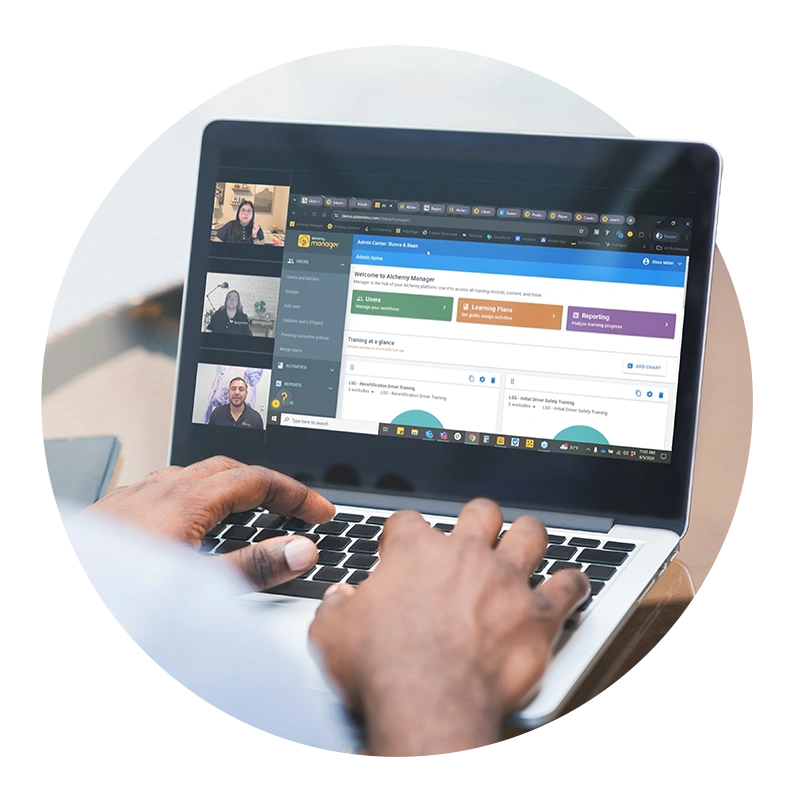
Platforms like the Alchemy Training System are designed to support this approach by giving structure for delivery, tools to verify understanding, and documentation that reflects if training is being applied on the floor. This is how training becomes impactful at every level of the organization.
Take a tour of the
Alchemy Training System
See how it can turn training into measurable results across your organization.
Schedule a demo